Strength Training & Functional Fitness
What I Learned From Trying Farmer's Carries as Part of Strength Training
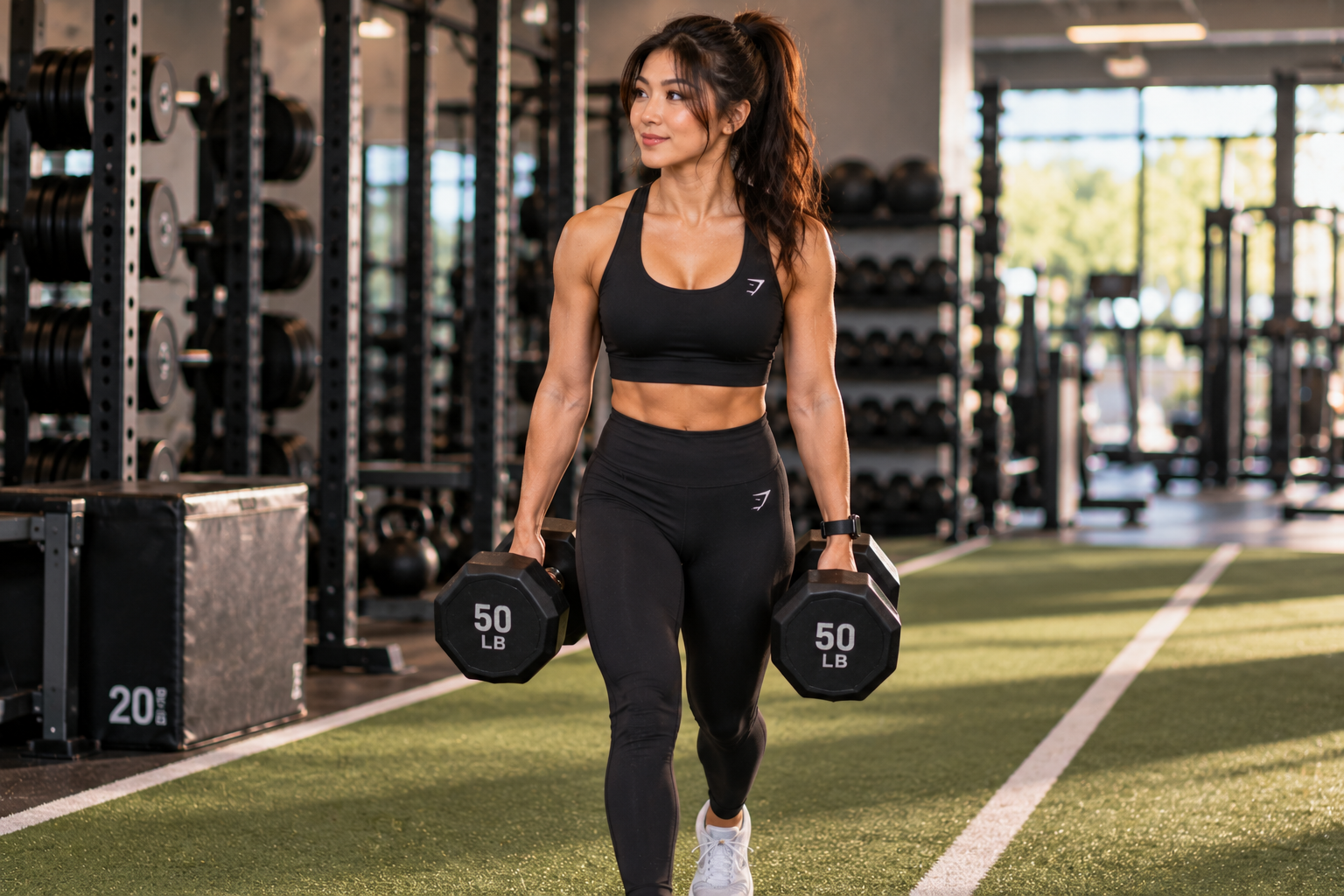
Most of the exercises I do at the gym involve staying in one place. Whether I'm using a machine, lifting dumbbells, or working with a barbell, I'm usually focused on moving a weight through a particular range of motion. I finish my set, put the weight down, and rest before doing it again.
Farmer's carries are a little different. Instead of lifting a weight repeatedly, the exercise involves picking up something heavy and walking with it. It sounds almost too simple to qualify as a serious strength training exercise, especially compared to movements that require more complicated techniques.
But there's something interesting about an exercise that challenges you simply by making you carry weight from one place to another.
An Exercise That Looks Easier Than It Feels
The first thing that stands out about farmer's carries is how little there is to learn. I can grab a dumbbell in each hand, stand upright, and start walking. There isn't a complicated sequence to memorize or a machine that needs several adjustments before I begin.
That simplicity can also make the exercise deceptive. Holding a pair of heavy dumbbells while standing still is one thing, but walking with them introduces another challenge. I have to maintain my balance, keep my body controlled, and resist the temptation to lean or let my shoulders collapse forward.
My hands and forearms also have to work continuously. Unlike an exercise where I can briefly relax my grip between repetitions, a farmer's carry requires me to hold the weights for the entire distance.
It doesn't take much walking to understand that the exercise involves more than simply moving my legs.
Grip Strength Becomes the Limiting Factor
One of the more interesting aspects of farmer's carries is how quickly they can expose a weakness in my grip. My legs might feel perfectly capable of continuing, but my hands can start getting tired long before the rest of my body does.
That creates a different kind of challenge from many traditional strength exercises. If I'm doing a leg press, my grip isn't particularly important. If I'm carrying heavy dumbbells across the gym, my ability to keep holding them becomes essential.
I've come to appreciate that grip strength has a practical role beyond lifting heavier weights. Carrying groceries, moving boxes, and handling awkward objects all involve some combination of holding and transporting weight.
Farmer's carries give me a straightforward way to train that ability without needing a separate exercise for every muscle involved.
Of course, grip strength isn't the only factor that determines how much weight I should carry. If I'm struggling to maintain my posture or control my steps, that matters just as much as whether my hands can hold on.
The Challenge of Staying Upright
Another thing I find interesting is how much attention farmer's carries place on posture. When I'm holding weights at my sides, my torso has to remain stable while my legs keep moving.
It's easy to assume that walking is automatic because I do it every day. Adding significant weight changes the situation, especially when I'm trying to avoid swinging the dumbbells or leaning from side to side.
I try to think about walking normally rather than exaggerating my movements. Keeping my steps controlled and my shoulders in a comfortable position makes more sense than trying to rush across the gym with the heaviest dumbbells I can find.
The exercise also makes me more aware of how my core contributes to movements that don't look like traditional abdominal training. I'm not doing crunches or holding a plank, but my trunk muscles are still working to help stabilize my body.
That doesn't mean farmer's carries replace every other core exercise. They simply provide another way to challenge stability while doing something that resembles an everyday activity.
Finding Enough Space Can Be the Hardest Part
One practical issue with farmer's carries is that not every gym is designed for walking around with heavy weights. Most gyms have plenty of equipment for lifting in one spot, but finding a clear path can be surprisingly difficult.
I wouldn't want to carry dumbbells through a crowded area where people are moving between machines or leaving equipment on the floor. Even if I can handle the weight, there's no reason to create an unnecessary obstacle for everyone else.
If the gym has a designated turf area or open training space, that's a much better option. Otherwise, I would rather shorten the distance or save the exercise for a time when there's enough room.
This is one of those situations where the practicality of an exercise matters. Something can be effective on paper without being convenient in every gym environment.
I also have to think about where I'm going to put the weights down. Finishing a carry safely is just as important as starting it, especially when my grip is getting tired.
Starting Lighter Makes More Sense
Because farmer's carries are relatively straightforward, I can see how someone might be tempted to grab the heaviest dumbbells they can hold and immediately start walking. But being able to pick up a weight doesn't necessarily mean I can carry it safely for a useful distance.
I think it's better to start with a manageable pair of dumbbells and see how my body responds. I want to be able to walk at a controlled pace without losing my balance, constantly adjusting my grip, or feeling like I need to drop the weights.
Once the movement feels comfortable, there are several ways to make it more challenging. I could gradually increase the weight, carry it a little farther, or adjust how long I spend walking.
I wouldn't increase everything at once, though. If I make the weights heavier and double the distance in the same workout, it becomes harder to tell which change is responsible for the added difficulty.
For someone with an existing back, shoulder, or hand problem, carrying heavy weights might not be appropriate without individual guidance. And if I experience sharp pain, numbness, or anything that feels unusual, that's a reason to stop rather than push through it.
Where Farmer's Carries Fit Into My Routine
I don't see farmer's carries as something that needs to replace the exercises I'm already doing. I still want to train individual muscle groups, use machines when they're useful, and maintain a routine that allows me to measure progress.
What interests me is how farmer's carries can complement those exercises. They challenge my grip, posture, and ability to move while carrying weight, all without requiring a complicated setup.
I can see them fitting near the end of a workout, when I've finished my main lifts and want to add a short, practical movement. The only thing I'd watch is whether my grip is already exhausted from other exercises, since that could affect how well I perform the carries.
I also wouldn't judge their value entirely by how sore I feel afterward. The purpose isn't to destroy my forearms or make walking difficult the next day. It's to develop strength and control in a movement that I can gradually improve.
Strength Doesn't Always Have to Look Complicated
One thing farmer's carries remind me of is that not every useful exercise needs an elaborate technique or specialized piece of equipment. Sometimes a movement as ordinary as carrying something heavy can challenge parts of my body that I don't pay much attention to during other exercises.
There's also something satisfying about being able to connect an exercise to everyday life. I might never need to perform a perfect barbell movement outside the gym, but I'll almost certainly need to carry heavy objects from one place to another.
That doesn't make farmer's carries more important than traditional strength training. It just gives them a different purpose, one that I think is worth considering when deciding how to build a well-rounded routine.
For me, the biggest lesson is that strength isn't only about moving a weight up and down. Being able to hold it, stabilize it, and move with it under control is another useful skill.
And sometimes, the simplest exercises are the ones that make me notice that difference.
Make sure to check out the Kato Tam fitness coach website for workout tips, daily nutritional insights, fitness motivation and more!