Strength Training & Exercise Technique
The Difference Between Using a Pec Deck Machine and Doing Dumbbell Flyes
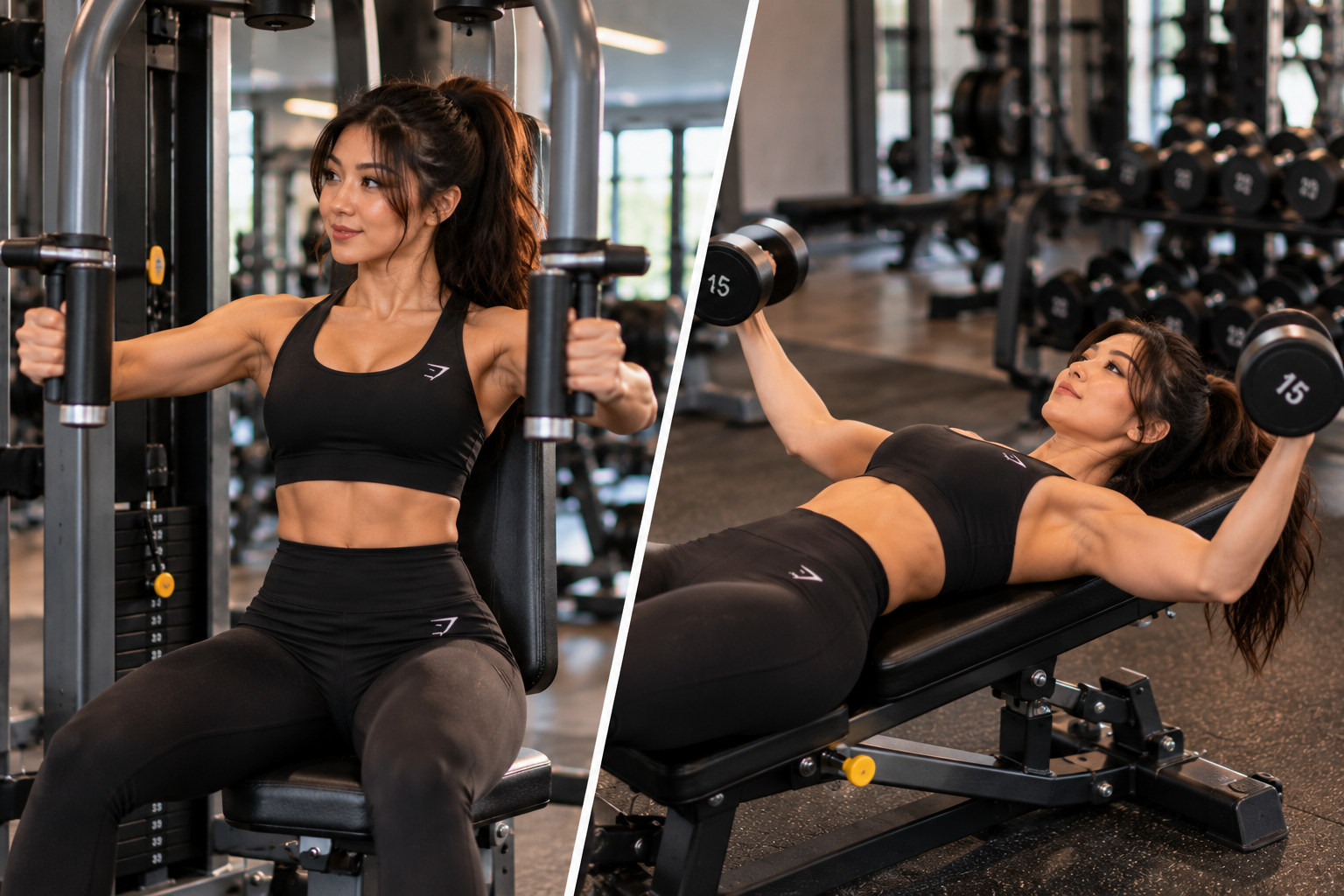
There are certain exercises at the gym that look like they're accomplishing almost the same thing. The pec deck machine and dumbbell flyes are good examples. Both involve bringing my arms together in front of my body, and both are commonly used to train the chest.
For a long time, I didn't think there was much reason to compare them. If the pec deck was available, I could use that. If I wanted to work with dumbbells, I could do flyes instead. I assumed the difference was mostly about which equipment I preferred.
But the more I paid attention to how exercises feel and how they're performed, the more I realized that two movements can target the same muscles while creating very different training experiences.
The Pec Deck Takes Away Some of the Guesswork
One thing I appreciate about the pec deck is how straightforward it can be. Once I've adjusted the seat and handles to a comfortable position, I can concentrate on bringing my arms together without worrying about balancing separate weights.
The machine guides the movement along a fixed path. That means I don't have to spend as much attention controlling the direction of each arm, which can make it easier to concentrate on the chest muscles doing the work.
I also like that changing the resistance is usually simple. If the weight feels too heavy, I can move the pin to a lighter setting without searching for another pair of dumbbells.
That convenience becomes especially noticeable toward the end of a workout. When my chest and arms are already tired from pressing exercises, I don't necessarily want another movement that requires a lot of setup and coordination.
The pec deck gives me a relatively simple way to continue training my chest while keeping the movement controlled.
Dumbbell Flyes Require More Coordination
Dumbbell flyes introduce a different challenge because each arm has to control its own weight. When I'm lying on a bench, I have to manage the position of both dumbbells throughout the movement rather than relying on a machine to guide them.
That makes the exercise feel less predictable, especially if I'm not paying attention to my arm position or lowering the weights too quickly.
I think this is one reason dumbbell flyes can be deceptively difficult. Someone might be comfortable pressing fairly heavy dumbbells and assume they can use a similar weight for flyes. But the mechanics are different, and the longer lever created by extending the arms makes relatively light weights challenging.
I wouldn't approach dumbbell flyes as an opportunity to lift as much weight as possible. I'd rather use a manageable pair of dumbbells and focus on controlling the movement.
There's also the practical issue of getting the dumbbells into position and putting them down safely afterward. Those details might not seem important when watching someone demonstrate the exercise, but they matter when I'm actually doing it.
The Resistance Feels Different
One of the more interesting differences is how resistance changes throughout each movement.
With dumbbell flyes on a flat bench, gravity creates the greatest turning force around the shoulder when my arms are spread farther apart. As I bring the dumbbells together above my chest, that turning force decreases.
This means the exercise can feel particularly demanding near the bottom of the movement, where my chest muscles are in a more stretched position. Near the top, the dumbbells may still be heavy, but the mechanical demand on the chest is different.
The pec deck works differently because the machine determines the resistance path. Depending on its design, it can maintain a meaningful challenge through more of the movement, including as my arms come together.
Not every pec deck feels identical, though. Different machines have different handle positions, resistance mechanisms, and movement paths, so I wouldn't assume they all provide exactly the same resistance.
What matters to me is recognizing that these exercises aren't perfectly interchangeable just because they involve a similar arm movement.
Comfort and Range of Motion Matter
Another difference I pay attention to is how each exercise feels around my shoulders.
With dumbbell flyes, I have more freedom to choose the path of my arms. That flexibility can be useful, but it also means I'm responsible for controlling how far I lower the weights.
I don't need to lower the dumbbells as far as physically possible to make the exercise effective. If I go beyond a comfortable range, especially with too much weight, I could place unnecessary stress on my shoulders.
I prefer keeping a slight bend in my elbows and lowering the weights only as far as I can comfortably control. The goal is to train my chest, not see how close I can get the dumbbells to the floor.
The pec deck can make controlling the movement easier, but it isn't automatically comfortable for everyone. A machine's fixed path might not match someone's shoulder structure or mobility particularly well.
That's where adjusting the seat and starting position becomes important. If the handles force my shoulders into an awkward position, I would rather make an adjustment or choose another exercise than force myself through it.
There's also a difference between normal muscular effort and pain. Sharp pain, persistent discomfort, or unusual joint symptoms aren't things I'd try to overcome by pushing harder. Those are reasons to stop and, when appropriate, get professional guidance.
Which One Is Better for Building My Chest?
I don't think there's a universal winner between the pec deck and dumbbell flyes. Both can provide a useful chest-training stimulus when performed with appropriate resistance and technique.
The pec deck has an advantage in convenience and stability. Because the machine handles much of the movement path, I can focus on performing controlled repetitions and getting close to muscular fatigue without worrying as much about balancing the weights.
Dumbbell flyes offer more freedom of movement, but they also require more coordination. I need to pay closer attention to my technique, particularly near the bottom of the exercise.
I also don't assume that an exercise is more effective simply because it uses free weights. Machines can be excellent tools for building muscle, and having fewer balance demands can sometimes be an advantage rather than a limitation.
At the same time, I wouldn't dismiss dumbbell flyes just because the pec deck is easier to set up. If I enjoy the movement, can perform it comfortably, and can progressively challenge myself, it can still have a place in my routine.
The important thing is that I'm choosing an exercise for a reason rather than assuming one piece of equipment is automatically superior.
How I Decide Which One to Use
If I've already done several pressing exercises and want to finish my chest workout with something straightforward, I'm more likely to choose the pec deck. I can adjust the weight quickly, concentrate on my repetitions, and avoid unnecessary complications when I'm already fatigued.
Dumbbell flyes make more sense when I want to use free weights and have enough energy to control the movement carefully. I'd start with lighter dumbbells than I use for pressing and make sure I can maintain a comfortable range of motion.
I also consider what's available. If the pec deck is occupied and there's an open bench with suitable dumbbells nearby, I don't necessarily need to wait around. I can choose the alternative without feeling like I've ruined my workout.
What I wouldn't do is switch between the two every session and expect the weights or repetition numbers to be directly comparable. A pec deck's weight stack and a pair of dumbbells create different mechanical demands, so the numbers don't tell the same story.
If I'm trying to measure progress, it makes more sense to compare my performance on the same exercise over time.
Similar Exercises Can Serve Different Purposes
The more time I spend strength training, the less interested I become in finding one perfect exercise for every muscle group. There are usually several ways to train the same muscles, and the differences often come down to comfort, control, equipment, and how the movement fits into the rest of my workout.
The pec deck and dumbbell flyes are a good reminder of that. One provides a guided movement that makes it easier to concentrate on my chest, while the other gives me more freedom but requires greater control.
Neither exercise needs to be complicated, and I don't need to include both in every chest workout to feel like I've covered everything.
For me, the better choice is the one I can perform consistently, comfortably, and with enough effort to make it worthwhile. Sometimes that's the pec deck, and sometimes it's a pair of dumbbells.
Understanding the difference simply helps me make that decision more intentionally.
Make sure to check out the Kato Tam fitness coach website for workout tips, daily nutritional insights, fitness motivation and more!