Fitness Nutrition & Eating Habits
What I Learned From Comparing Air Frying and Oven Baking for Healthy Meals
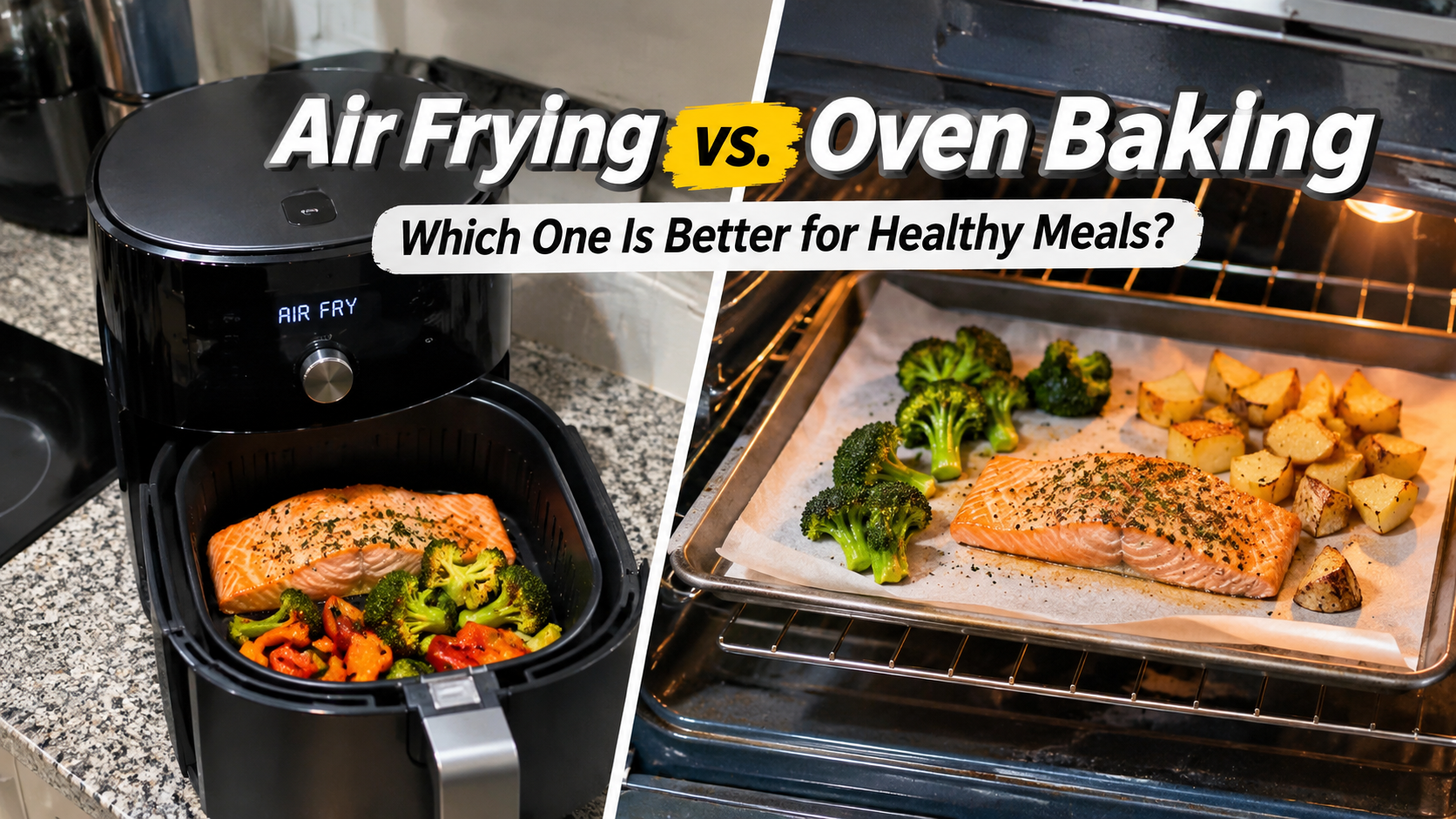
Cooking at home has become an important part of how I manage my nutrition. Since I pay attention to protein, calories, and the overall quality of my meals, I like having control over how my food is prepared. But one thing I've started thinking about more carefully is whether the cooking method itself makes a meaningful difference.
Two methods I find particularly interesting are air frying and oven baking. Both can prepare foods without deep frying, and both can work well for proteins, vegetables, and other everyday ingredients. At first, I assumed air frying was simply a healthier version of baking, but the more I compared them, the more I realized that the differences are mostly about cooking efficiency, texture, and convenience.
An air fryer is essentially a compact convection oven. It uses a heating element and a fan to circulate hot air around the food, which helps cook the surface relatively quickly. A conventional oven also uses heat, and convection models circulate air in a similar way, but the larger cooking chamber can produce a different cooking experience.
The first difference I noticed was cooking time. Air fryers often heat up quickly and can cook smaller portions faster than a full-size oven. That's appealing when I'm preparing a simple meal and don't want to spend much time waiting for the oven to preheat.
If I'm cooking a single serving of fish or a small portion of vegetables, using an air fryer can feel more practical. I can place the food in the basket, set the temperature, and check on it after a relatively short period. The process is straightforward, especially when I'm not preparing food for several people.
Oven baking becomes more appealing when I'm making larger quantities. A full-size baking sheet can hold several portions of protein or vegetables at once, which makes it easier to prepare multiple meals. Instead of cooking several small batches, I can use the oven's larger capacity to get more food ready at the same time.
This distinction matters because convenience isn't always about which appliance cooks the food the fastest. If I have to run an air fryer three or four times to prepare everything, the total process might take longer than baking one large batch. The best method depends on how much food I'm making.
Another difference is how the food turns out. Air fryers are known for producing crisp surfaces because the circulating hot air helps remove moisture from the outside of the food. That can be useful for foods like potatoes, chicken, and certain vegetables.
I like the idea of getting a crisp texture without needing to submerge food in oil. A lightly coated potato wedge can develop a browned exterior while remaining soft inside. That makes air frying an appealing alternative when I want something that resembles fried food but don't want to use a large amount of oil.
However, I don't think air frying automatically makes every food healthier. The ingredients and amount of added fat still matter. If I cover something in oil, breading, or a high-calorie sauce, the air fryer doesn't somehow remove those calories.
Oven baking works under the same general principle. I can bake chicken, fish, potatoes, or vegetables with relatively little added oil. The cooking method itself doesn't require large amounts of fat, although the amount I choose to use can change the final calorie content.
That made me realize that the comparison isn't really about one appliance being healthy and the other being unhealthy. Both can support nutritious meals when I start with appropriate ingredients and prepare them in a way that fits my goals. The differences are more about how efficiently each appliance produces the result I want.
One of the foods I think about most is fish. I regularly include fish in my diet because it provides protein and, depending on the species, beneficial fats. Both air frying and oven baking can work well, but they require attention to temperature and cooking time.
An air fryer can cook a smaller fish portion relatively quickly, which is convenient when I want a meal without much preparation. The circulating air can also help develop a lightly browned exterior. But because the cooking chamber is compact and the heat transfer can be efficient, it's possible to overcook fish if I don't monitor it.
Oven baking offers a little more flexibility for larger portions or multiple pieces. I can arrange the fish on a baking sheet and prepare vegetables alongside it, depending on their cooking requirements. That makes the oven particularly useful when I'm planning a complete meal rather than preparing one ingredient.
I've learned that neither method guarantees moist or tender fish. The result depends on factors like thickness, temperature, cooking time, and the type of fish. A food thermometer is more reliable for checking doneness than assuming a particular number of minutes will work for every portion.
Chicken is another protein that works well with both methods. Air frying can create a browned exterior relatively quickly, especially with smaller pieces. Oven baking can be convenient for larger portions or when I'm preparing several servings at once.
What matters most to me is making sure chicken reaches a safe internal temperature without cooking it so long that it becomes dry. For poultry, the USDA recommends an internal temperature of 165°F. That guideline applies regardless of whether I'm using an air fryer or an oven.
I also have to consider how much food I place inside the appliance. Overcrowding an air fryer basket can interfere with airflow and lead to uneven cooking. If I want a crisp result, leaving enough space around the food is often more effective than filling the basket completely.
An oven has similar limitations, although the larger space can make arranging food easier. Packing too many ingredients onto a baking sheet can trap moisture and encourage steaming instead of browning. I get better results when I pay attention to spacing rather than assuming the oven will handle any quantity.
Vegetables are where I find the comparison especially interesting. Air frying can produce crisp edges on foods like broccoli, cauliflower, carrots, and Brussels sprouts. That can make vegetables more appealing when I want a different texture from steaming or boiling.
Oven roasting can produce similar results, particularly when I use an appropriate temperature and spread the vegetables evenly across a baking sheet. The main difference is often how much food I can prepare at once and how long it takes to achieve the texture I want.
I don't believe one method automatically preserves more nutrients in every vegetable. Nutrient retention depends on the specific food, cooking temperature, cooking duration, and nutrient being measured. Some nutrients are sensitive to heat, while others may become more available after cooking.
That means I don't need to worry about choosing the supposedly perfect appliance for every vegetable. Eating a variety of vegetables regularly is more important to me than trying to optimize every cooking method. If air frying makes certain vegetables more enjoyable, that's already a practical benefit.
Potatoes are another example where the preparation method can make a noticeable difference. Air-fried potatoes can develop a crisp surface with a modest amount of oil, while oven-roasted potatoes can achieve a similar texture. Both methods can be useful alternatives to deep frying.
The nutritional difference largely depends on what I add to the potatoes and how much I eat. A potato doesn't suddenly become unhealthy because it's baked instead of air fried. The cooking oil, seasonings, toppings, and portion size all contribute to the overall meal.
I've also learned to pay attention to excessive browning when cooking starchy foods. High-temperature cooking can produce acrylamide in certain foods, particularly potatoes and other carbohydrate-rich ingredients. Cooking them to a golden-yellow color rather than allowing them to become very dark is one way to reduce unnecessary exposure.
This applies to both air frying and oven baking. I wouldn't assume that one method completely avoids the issue. Temperature, cooking time, and the degree of browning are more relevant than the name of the appliance.
Another factor I consider is energy use. Because an air fryer has a smaller cooking chamber and often cooks food more quickly, it can use less electricity for certain small meals. But that advantage isn't guaranteed for every situation.
If I'm preparing several portions, a full-size oven may be more efficient than running multiple air fryer batches. The appliance's wattage, cooking duration, and amount of food all affect total energy consumption. I think it's more useful to consider the entire cooking process than assume the smaller appliance always uses less energy.
Cleanup is another practical difference. An air fryer basket can be relatively easy to wash, especially when it has a removable tray. But grease and food particles can accumulate around the basket and heating area, so regular cleaning is important.
With oven baking, I can use a baking sheet or oven-safe dish that fits the meal. Sometimes that means more surface area to clean, but it can also be convenient when I'm preparing everything in one pan. I don't think either appliance wins automatically when it comes to cleanup.
I also have to consider the materials used in the cookware. Some air fryer baskets have nonstick coatings, while baking sheets may be made from stainless steel, aluminum, or other materials. Following the manufacturer's temperature limits and avoiding damaged cooking surfaces are sensible precautions regardless of which appliance I use.
One advantage of oven baking is versatility. I can cook large cuts of meat, multiple trays of vegetables, casseroles, and other dishes that may not fit inside a typical air fryer. If I'm preparing food for several days, that flexibility becomes valuable.
Air frying has a different advantage because it can make smaller meals feel less demanding. I don't need to heat a large oven just to cook one serving of vegetables or reheat a small portion of food. That convenience can make it easier to prepare something at home instead of choosing a less suitable option simply because I'm short on time.
I think this is where the connection to healthy eating becomes more meaningful. A cooking method that saves time can help me maintain consistent eating habits. If preparing a protein-rich meal feels easy, I'm more likely to do it regularly.
At the same time, I don't want to rely on convenience at the expense of food quality. Frozen breaded foods can be cooked in an air fryer just as easily as fresh ingredients, but the nutritional profiles may be very different. The appliance doesn't determine whether the overall meal is balanced.
I still need to consider protein, vegetables, carbohydrates, fats, and total energy intake. Cooking equipment can make preparation easier, but it doesn't replace the basic decisions involved in building a nutritious meal.
I've also noticed that the type of meal affects which method I prefer. If I'm making a quick portion of fish with a side of vegetables, an air fryer might be the easiest choice. If I'm preparing several servings of chicken, potatoes, and vegetables for the next few days, the oven might make more sense.
That doesn't mean I need to choose one method exclusively. Both appliances can serve different purposes, and using them strategically may be more useful than trying to declare one the better option.
The more I compare air frying and oven baking, the more I realize that healthy cooking isn't determined by a single technique. Both methods can prepare nutritious meals with relatively little added oil. Both can also produce high-calorie meals depending on the ingredients and preparation choices.
For me, the biggest advantage of air frying is convenience for smaller portions and the ability to create crisp textures relatively quickly. The biggest advantage of oven baking is capacity and flexibility when preparing larger meals. Those differences matter more in my daily routine than small nutritional claims that may not apply to every food.
I've learned that choosing the right cooking method should start with what I'm preparing and how much time I have. I don't need to complicate the decision by assuming every meal must be cooked in whichever appliance is currently considered healthier. I can focus on the ingredients, portion sizes, and cooking practices that support my goals.
My biggest takeaway is that air frying and oven baking are both useful tools for maintaining a fitness-focused diet. Neither automatically makes food healthier, but both can make nutritious meals easier to prepare. When I understand their strengths and limitations, I can choose the method that fits the situation.
For now, I see air frying as a convenient option for quick meals and oven baking as a practical choice for larger portions. Having both available gives me flexibility without requiring a major change to how I eat. Sometimes improving my nutrition isn't about discovering a new superfood or complicated cooking technique, but simply finding easier ways to prepare the foods I already enjoy.
Make sure to check out the Kato Tam fitness coach website for workout tips, daily nutritional insights, fitness motivation and more!